System Development Life Cycle

The System Development Life Cycle is the process of developing information systems through investigation, analysis, design, implementation, and maintenance.  The System Development Life Cycle (SDLC) is also known as Information Systems Development or Application Development.


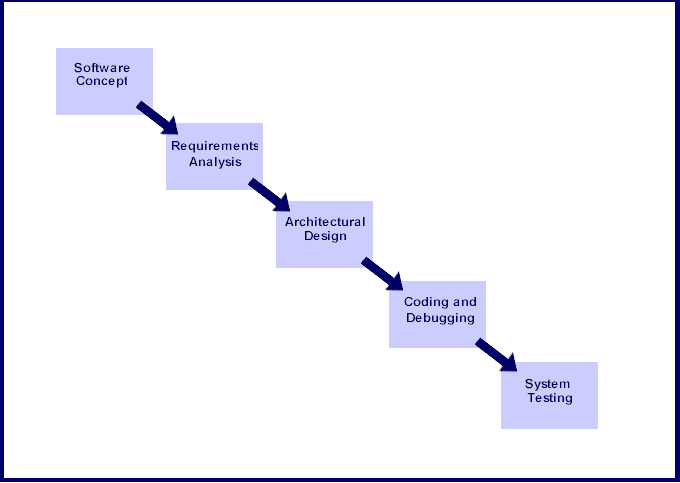
Below are the steps involved in the System Development Life Cycle.  Each phase within the overall cycle may be made up of several steps.


sdlc.gif (6670 bytes)


Software Concept


The first step is to identify a need for the new system.  This will include determining whether a business problem or opportunity exists, conducting a feasibility study to determine if the proposed solution is cost effective, and developing a project plan.

This process may involve end users who come up with an idea for improving their work or may only involve IS people.  Ideally, the process occurs in tandem with a review of the organization's strategic plan to ensure that IT is being used to help the organization achieve its strategic objectives.  Management may need to approve concept ideas before any money is budgeted for its development.


Requirements Analysis


Requirements analysis is the process of analyzing the information needs of the end users, the organizational environment, and any system presently being used, developing the functional requirements of a system that can meet the needs of the users.  Also, the requirements should be recorded in a document, email, user interface storyboard, executable prototype, or some other form.  The requirements documentation should be referred to throughout the rest of the system development process to ensure the developing project aligns with user needs and requirements.

IS professionals must involve end users in this process to ensure that the new system will function adequately and meets their needs and expectations. 


Architectural Design


After the requirements have been determined, the necessary specifications for the hardware, software, people, and data resources, and the information products that will satisfy the functional requirements of the proposed system can be determined.  The design will serve as a blueprint for the system and helps detect problems before these errors or problems are built into the final system.

IS professionals create the system design, but must review their work with the users to ensure the design meets users' needs.

Coding and Debugging


Coding and debugging is the act of creating the final system.  This step is done by IS professionals.
System Testing


The system must be tested to evaluate its actual functionality in relation to expected or intended functionality.  Some other issues to consider during this stage would be converting old data into the new system and training employees to use the new system.  End users will be key in determining whether the developed system meets the intended requirements, and the extent to which the system is actually used.


Other points to consider

Buy vs. Develop The system development life cycle does not change if the decision is made to purchase an off-the-shelf program rather than develop a home grown system.  The coding and debugging process is replaced with a process used to evaluate the potential purchased products, and to actually purchase the software.  

Coding and debugging may be required for the interfaces that link the purchased software to existing systems that must communicate with the new system.


Importance of planning The planning stages, requirements analysis and architectural design, are the most important stages.   Good planning will help reduce errors and reduce the chance for missing or extending production schedules.  An undetected design error will take 10 times longer to fix during the debugging stage than had it been detected and corrected during the planning stage.


Moving back It is possible to go back to previous steps as subsequent analysis warrants.  Typically, the life cycle has a spiral shape rather than a linear one, with repeated steps back to prior activities as requirements are refined and new information is gathered.


Business Case & Project Plan A business case and a project plan are created during the concept stage, and then continually updated throughout the life cycle as users and developers gain a clearer idea of the scope of the project.  Management reviews both of these revised documents on a regular basis and determines whether resources should continue to be committed to the project.